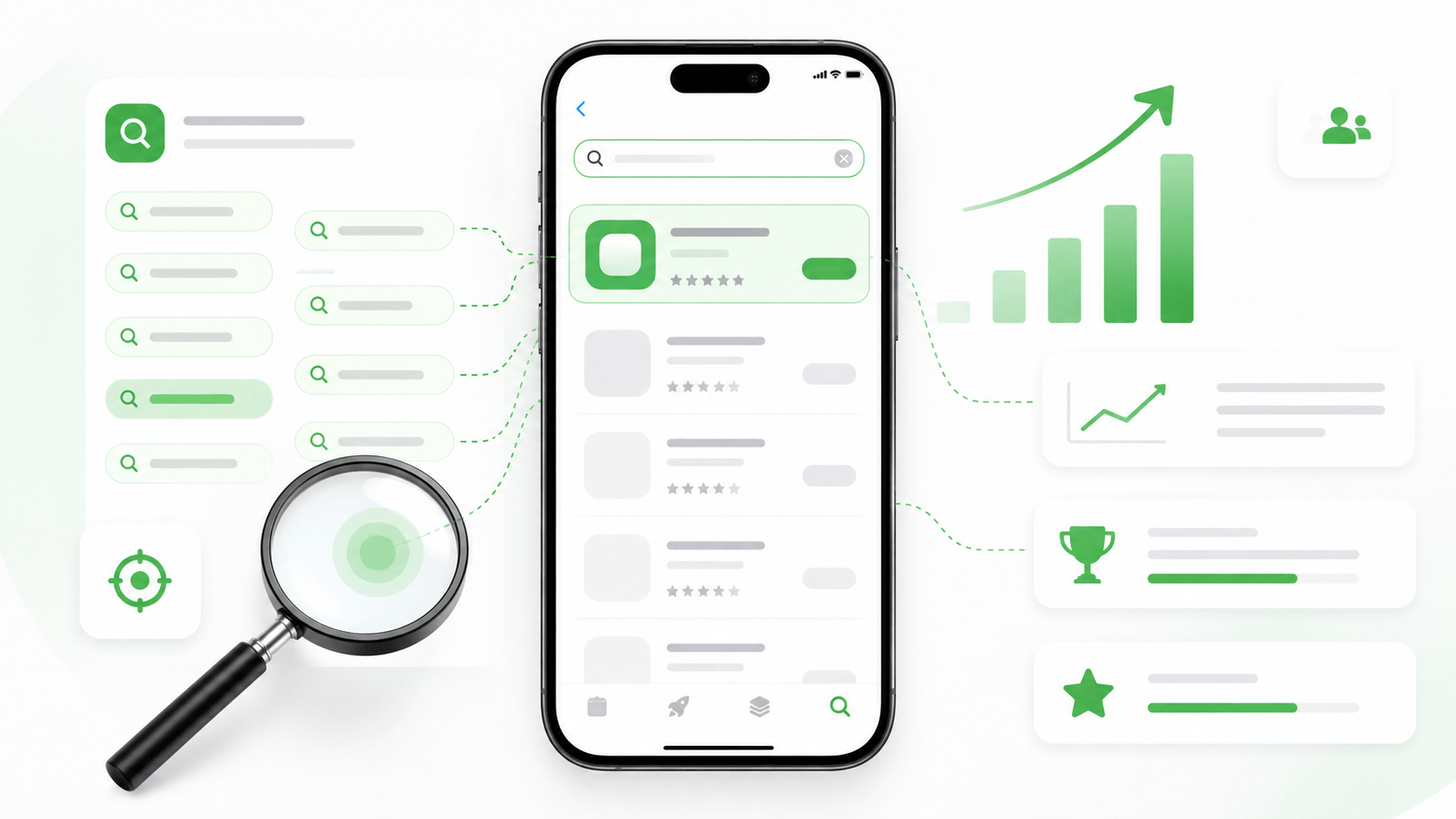
Keywords help users find your app, but they only work when they match real intent. The goal is not to collect impressive words. The goal is to connect your app with the searches people already make when they want a solution.
Start by writing down plain phrases your target user might type. Do not begin with the app name. Begin with the problem. For example: "habit tracker for ADHD", "invoice maker for freelancers", "workout timer for home gym", or "shared grocery list for couples." These phrases are more useful than broad words like productivity, health, finance, or lifestyle.
Broad keywords are tempting because they have more traffic, but they are usually harder to rank for and less specific. A new app has a better chance with narrower phrases that describe a clear use case. Ten users from a focused search can be more valuable than a thousand impressions from people who are not looking for your exact thing.
Look at the language users use in reviews of similar apps. Reviews often reveal better keywords than competitor titles because users describe the problem in their own words. Pay attention to repeated phrases, frustrations, and outcomes.
Use keywords naturally across your title, subtitle, short description, and full description. Do not stuff the same word everywhere. Store pages still need to read like they were written for people. If keyword usage makes the text awkward, it usually hurts trust.
Think in combinations. A single keyword like "notes" is too broad. A phrase like "quick notes for meetings" or "private notes with reminders" gives the store and the user more context.
After choosing keywords, check whether your screenshots and description support the same promise. If your keyword says "budget planner", but your screenshots show a generic dashboard with no budgeting context, the listing feels inconsistent.
Keyword work is not a one-time task. Watch which users you attract, what they say, and which store page changes improve installs. Early on, your best keywords often come from listening to the first real users, not from guessing in isolation.